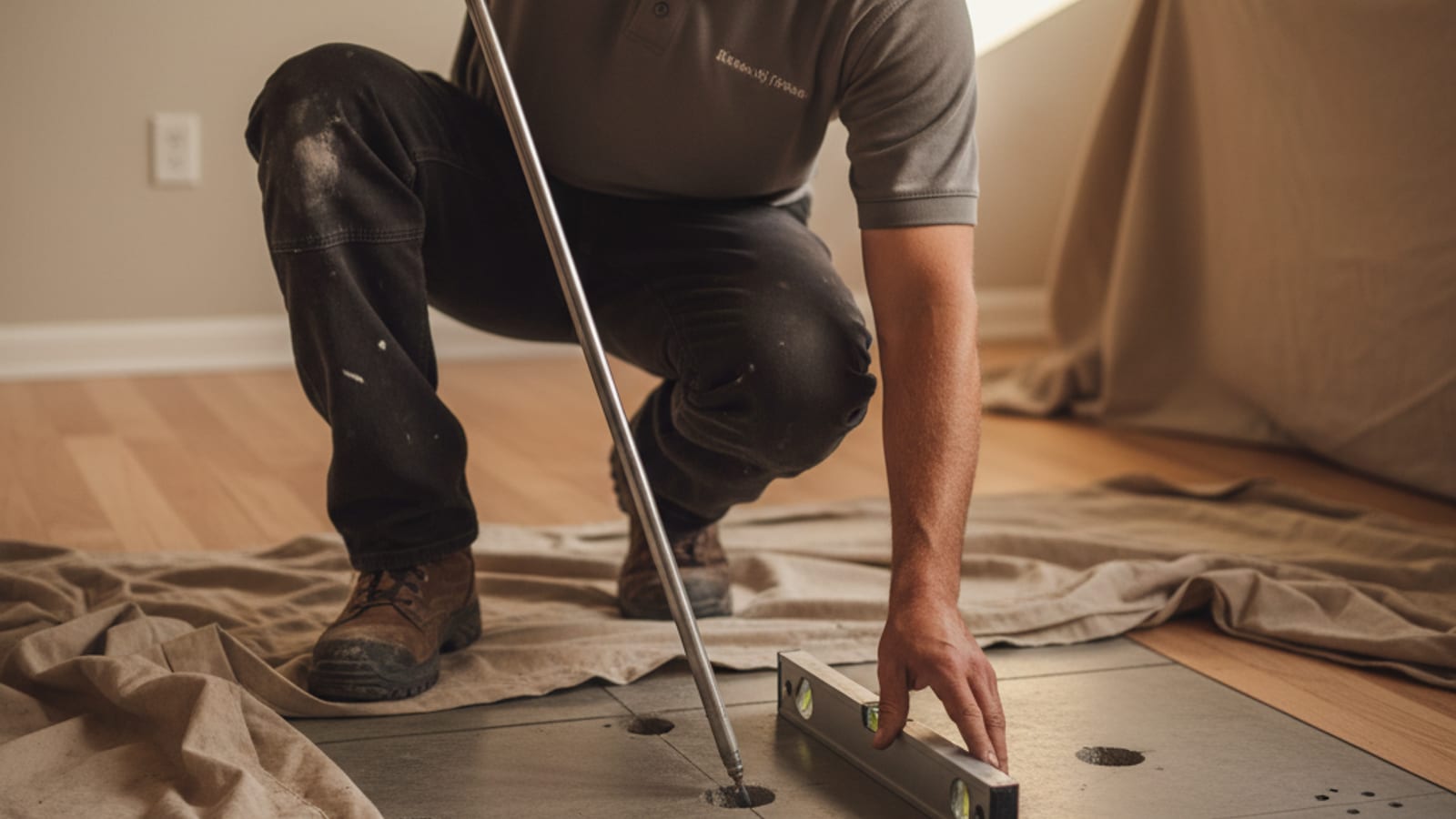
Slab foundation repair fixes a concrete slab-on-grade floor that has cracked, settled, or lifted. In San Diego County, the cause is almost always the soil under it: expansive clay that swells when wet and shrinks when dry. The fix depends on what the soil did. Settled slabs get lifted with foam or piers. Cracked slabs get injected or stabilized. Most San Diego slab repairs land between $1,500 and $18,000, depending on cause and extent.
Here’s how slab repair actually works on a San Diego home, and how to tell what your slab needs.
Why San Diego slabs move in the first place
Most homes here sit on slab-on-grade foundations. The concrete pours straight onto compacted soil, no crawl space, no basement. That works fine until the soil moves.
San Diego County is full of expansive clay. It swells when it soaks up water and shrinks when it dries out. Over a single wet-then-dry cycle, that clay can move a slab up and down by an inch or more. Do that every year and a slab cracks, tilts, or separates from its footings.
You see it worst in places like Scripps Ranch, Rancho Bernardo, Santee, and the inland canyons of East County, where clay content runs high. Coastal sandy soils move less, but hillside fill in places like La Jolla and Del Mar brings its own settlement problem.
Three things drive most slab movement here:
- Heave. Clay swells under one part of the slab and pushes it up. Common near downspouts, hose bibs, and bad drainage.
- Settlement. Soil shrinks or compresses and a section of slab drops. Common on fill lots and around old plumbing trenches.
- Slab leaks. A supply line under the slab leaks, washes out soil, and a void forms. The slab drops into it.
If you want the deeper soil story, read our guide to expansive clay soils in San Diego.
Signs your slab needs repair
You rarely see the slab itself. You see what it does to the house above it.
- Cracks in the floor, especially diagonal cracks that widen at one end
- Floor tiles that pop, crack, or sound hollow when you tap them
- A floor that feels sloped, or a marble that rolls on its own
- Cracks in drywall above doors and windows
- Doors and windows that stick or won’t latch
- Gaps where the baseboard pulls away from the wall
One small crack isn’t an emergency. A pattern of cracks plus a sloping floor plus sticking doors usually means the slab moved. For the full list, see our signs of foundation problems guide.
The repair methods, and what each one costs
Slab repair isn’t one job. The method depends on whether your slab settled, heaved, cracked, or lost soil to a leak. Here are the common methods and real San Diego ranges.
| Method | What it fixes | San Diego cost |
|---|---|---|
| Crack injection | Stable cracks, water intrusion | $400 to $1,200 per crack |
| Slab jacking (foam) | Settled interior slab, voids | $1,500 to $4,500 typical |
| Slab piering | Settled slab on deep soil movement | $1,800 to $4,000 per pier |
| Soil stabilization | Active expansive clay under slab | $3,000 to $10,000 |
| Partial slab replacement | Severely broken slab sections | $8,000 to $18,000 |
Crack injection seals cracks with epoxy or polyurethane. Epoxy for dry structural cracks, polyurethane for cracks that leak water. It stops the crack from spreading and keeps water out. It doesn’t lift anything.
Slab jacking drills small ports and pumps polyurethane foam under the slab. The foam fills voids and lifts the settled section back to level. Fast, low-mess, and the foam doesn’t wash out like old-style mudjacking did. Best for a single sunken corner, a settled hallway, or a dropped garage slab.
Slab piering drives steel piers through the slab down to stable soil or bedrock, then lifts and holds. Reserved for settlement too deep for foam, usually where the soil itself failed rather than just compacted. More involved, needs an engineer’s plan.
Soil stabilization treats the clay directly, injecting material that reduces how much the soil swells and shrinks. It addresses the cause, not just the symptom. Often paired with drainage work.
Partial replacement breaks out and re-pours a section of slab that’s cracked past repair. Last resort, but cheaper than chasing a slab that keeps breaking.
For a full breakdown across every foundation repair tactic, see our foundation repair cost guide for San Diego.
How a slab repair job actually runs
Most slab jobs follow the same path:
- Free inspection. We look at the slab, the cracks, the floor levels, and the drainage around the house. We take floor elevation readings to map where the slab dropped or lifted.
- Diagnosis. We figure out the cause: settlement, heave, or a leak. That decides the method. Treating the symptom without the cause means it comes back.
- Upfront written quote. You get a fixed scope and price before any work starts. No surprise add-ons mid-job.
- Engineering, if needed. Piering and structural lifts need a stamped plan and a permit. Foam jacking on a small interior slab usually doesn’t. We tell you which camp you’re in.
- The work. Foam jacking is often a one-day job. Piering and replacement run longer.
- Verification. We re-check floor levels after the lift to confirm the slab moved where it should.
What about slab leaks
A slab leak is its own animal. A pressurized water line under the slab springs a leak, erodes the soil, and the slab drops into the new void.
The fix is two trades. A plumber finds and repairs the leak first. Then the foundation work addresses the void and any settlement, usually foam injection to fill the void and lift the slab. Don’t do the foundation side before the leak is fixed, or you’re lifting a slab that’s about to drop again.
We’re foundation contractors, not plumbers, so we coordinate but don’t repair the pipe. Full detail in our slab leaks and foundation damage guide.
Can you wait on slab repair
Sometimes. A single stable hairline crack with no sloping floor can wait and get watched. Active movement won’t wait. A slab that’s still settling keeps cracking drywall, jamming doors, and stressing plumbing the longer you leave it.
The cheap window is early. Foam jacking a slightly settled corner costs a fraction of piering a slab that’s dropped two inches and cracked the kitchen tile. If you’re seeing new cracks month over month, get it looked at.
What to ask any slab contractor
Slab repair is one of those jobs where the same symptom gets very different bids. Ask these before you sign:
- What’s the actual cause? A contractor who can’t tell you why the slab moved is guessing at the fix.
- Is the quote upfront and fixed? Get the scope and price in writing before work starts.
- Does this need an engineer or permit? Piering and structural lifts in San Diego County generally do. Foam on a small interior slab generally doesn’t.
- What’s the warranty, and what voids it? Ask the contractor to explain their warranty and exclusions in writing, then read it. A warranty is only as good as its fine print.
- Will you address drainage too? If bad drainage caused the heave, fixing the slab without fixing the water means it comes back.
These are questions to put to any contractor you talk to, including us.
Frequently asked questions
How much does slab foundation repair cost in San Diego? Most jobs run $1,500 to $18,000. A single crack injection can be $400 to $1,200. Foam slab jacking on a settled corner is usually $1,500 to $4,500. Piering runs $1,800 to $4,000 per pier. The cause and the extent decide the number.
Can a cracked slab be repaired, or does it need replacing? Most cracked slabs get repaired, not replaced. Injection seals the crack, foam or piers lift settlement, and stabilization treats the soil. Full replacement is a last resort for slabs broken past repair.
Is slab jacking the same as mudjacking? Same idea, better material. Old mudjacking pumped a cement slurry that’s heavy and can wash out. Modern slab jacking uses polyurethane foam, which is lighter, sets fast, and resists water. We use foam.
Why does my slab keep cracking after repair? Usually because the cause wasn’t fixed. If expansive clay or bad drainage keeps moving the soil, sealing the crack alone won’t hold. The lasting fix addresses the soil and water, not just the concrete.
Do I need a permit for slab repair in San Diego? For piering and structural lifts, generally yes, plus an engineer’s plan. For minor crack injection or foam jacking on a small interior slab, usually no. We tell you which applies before we start.
Does homeowners insurance cover slab repair? Rarely for soil movement, which most policies exclude. Sudden slab-leak water damage is sometimes partly covered. The foundation repair from long-term void formation usually isn’t. Document everything and check your policy.
Get your slab looked at
If your floors are cracking or sloping, the first step is finding out what the soil actually did. We offer free inspections and free estimates across San Diego County, with upfront written quotes and no pressure. We know San Diego’s expansive clay and how it moves slabs, and we’ll tell you straight whether you need a quick foam lift or something bigger.
Call Base Pro San Diego at (858) 925-5546 to set up a free slab inspection.