Slab foundation repair in San Diego. Lift, level, seal.
Slab-on-grade is the most common foundation type in San Diego County, and when it moves, the whole house moves with it. Slabs settle when the soil under them shrinks (drought), washes out (plumbing leak), or compresses (uncompacted fill). We use polyurethane slab jacking to lift settled interior areas, structural epoxy for stable cracks, and full underpinning when the perimeter footing has dropped.
What's included in this service?
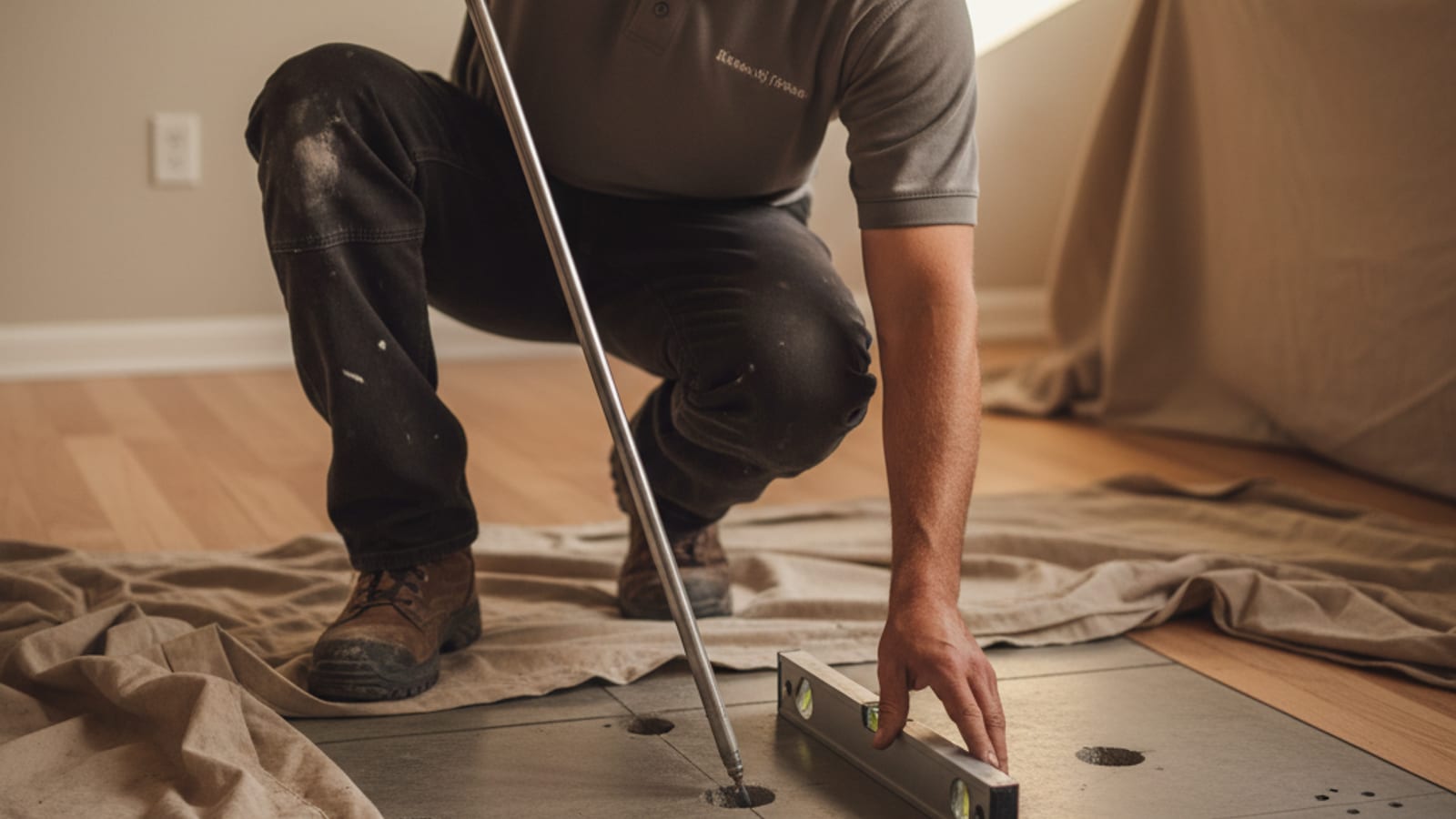
- Slab elevation survey at 4-foot grid across affected areas
- Polyurethane (HMI, Prime Resins, or equivalent) slab jacking for interior settlement
- Mudjacking with cement slurry where weight matters more than precision
- Structural epoxy injection for slab cracks
- Post-tension cable repair for PT slabs (cut, retension, encapsulate)
- Plumbing leak detection coordination with licensed plumber
- Tile and flooring removal and reset where required for access
- Full perimeter underpinning if the stem wall has settled
When do you need this service?
- Tile or hardwood floor that has cracked or buckled in a line
- Slab that sounds hollow when tapped (voids underneath)
- A specific room that has dropped while the rest of the house is level
- Plumbing leak under the slab that has been repaired but the slab is now low
- Settlement at one corner of a slab-on-grade home over 1 inch
What do homeowners ask about Slab Repair?
Will slab jacking break my flooring?
Modern polyurethane slab jacking is dimensionally precise to about 1/8 inch when the technician is good. Tile and hardwood usually survive lifts up to 1 inch. Larger lifts or older tile (1970s and earlier) often break and need to come up first. We tell you up front when we expect cosmetic damage.
How do I know if it is the slab or the soil?
We do a level survey, then look at the pattern. Settlement at one isolated interior point with the perimeter still level is usually a void under the slab (water washing out fines, a buried trash pit, an old plumbing trench). Settlement at the perimeter is usually soil bearing or expansive clay and needs underpinning, not just jacking.
What is post-tension repair?
Many San Diego homes built since the late 1970s have post-tensioned slabs. Steel cables are tensioned through the slab and anchored at the perimeter. When a cable corrodes or breaks, the slab loses some of its design strength. Repair involves cutting an access pocket, releasing tension safely, splicing or replacing the cable, retensioning, and patching. It is specialized work; never cut a PT slab without locating cables first.
Can plumbing leaks cause this?
Yes, frequently. A slow leak in a hot water line under the slab will wash out the fines under the slab over months and create a void. The slab eventually drops into the void. Step one is to find and repair the leak, step two is to fill the void with polyurethane or cement, step three is to re-level the slab.
Where do we offer Slab Repair in San Diego County?
We provide slab repair in every city and community in San Diego County. Pick your city for local climate notes and service specifics.
See slab repair in all 67 cities
Need slab repair in San Diego County?
Call for a free quote. Most work scheduled within the week.