Soil stabilization in San Diego. Fix the cause, not just the symptom.
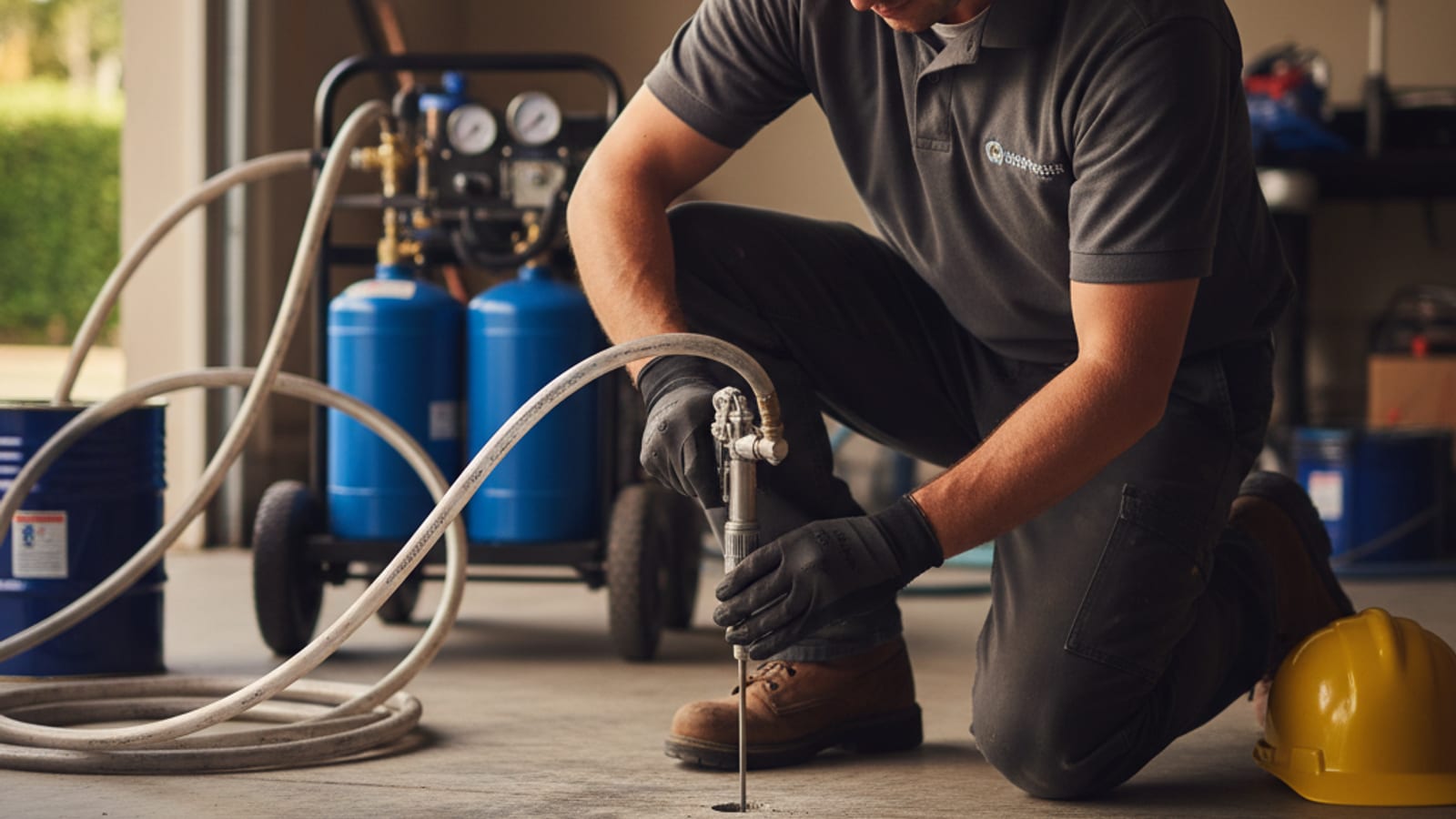
When the soil itself is the problem, repairing the foundation alone just delays the next failure. Soil stabilization addresses uncompacted fill, expansive clay, washout voids, and weak bearing strata directly. Polyurethane injection fills voids and lifts settled slabs. Chemical grout binds loose soils. Compaction grouting densifies in place. The right method depends on what is actually under the building.
What's included in this service?
- Sub-slab void mapping with ground-penetrating radar where needed
- Polyurethane (HMI, Prime Resins) injection for void fill and lift
- Chemical grouting (sodium silicate, polyurethane) for permeable soils
- Compaction grouting for densification of loose fill
- Coordination with geotechnical engineer for soils report when required
- Pre and post density testing where specified
- Sub-slab moisture barrier installation under new pours
- Re-leveling of slab sections lifted by stabilization
When do you need this service?
- Plumbing leak under the slab caused a void that needs filling
- Soil report calls for void fill or pre-pour stabilization
- Slab is settling but the perimeter footing is intact
- New ADU or addition over expansive or fill soils
- Settled hardscape (driveway, patio, walkway) with hollow areas under it
What do homeowners ask about Soil Stabilization?
What soils are most common in San Diego County?
We see expansive clays inland (especially east county and parts of inland north county), decomposed granite over bedrock in the foothills, alluvial fill in valleys and creek beds, and uncompacted urban fill on lots that were graded for development. Coastal terraces are usually stable. Hillside lots are the highest-risk class because of slope creep and drainage.
Will polyurethane lift my whole house?
Polyurethane will lift slabs and pavement effectively up to about 1.5 inches. It is not the right tool for lifting a structural footing carrying full house load; for that we use helical or push piers. Polyurethane shines at filling voids and lifting interior slab sections.
Is the polyurethane safe?
Yes, the cured resin is inert and structurally rated. The materials we use (HMI, Prime Resins, AP Lift) are NSF 61 listed for contact with potable water systems where required. We do not use sodium silicate or solvent-bearing products near interior occupied spaces.
Do I need a soils report first?
For permit work and for any structural underpinning above 6 piers, yes. For void fill and slab jacking, usually not. We tell you up front when a soils report is going to be required by the building department.
Where do we offer Soil Stabilization in San Diego County?
We provide soil stabilization in every city and community in San Diego County. Pick your city for local climate notes and service specifics.
See soil stabilization in all 67 cities
Need soil stabilization in San Diego County?
Call for a free quote. Most work scheduled within the week.