Foundation settlement is when part of your home sinks into the soil below it, pulling the structure out of level. In San Diego, the usual culprit is expansive clay soil that swells when wet and shrinks when dry. Repair means transferring your home’s weight onto stable soil deeper down, usually with steel piers, then lifting it back toward level. Costs run from a few thousand dollars for a small section to $40,000 or more for whole-home underpinning.
Most national guides treat settlement the same everywhere. San Diego is not everywhere. Our soil, hillsides, dry-then-wet seasons, and slab construction create settlement patterns you won’t see in the Midwest. This guide explains what’s actually happening under your house here, how the fixes work, and what they cost locally.
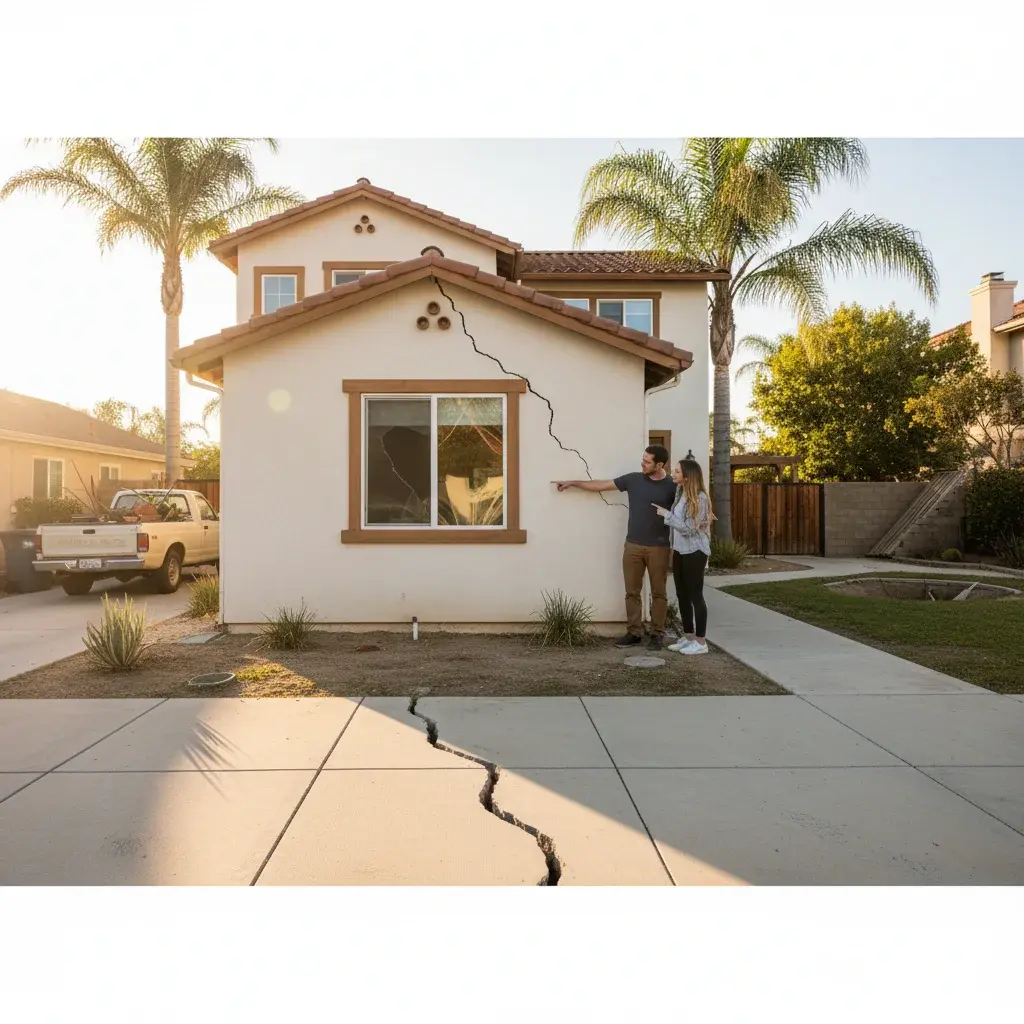
What causes foundation settlement in San Diego
Settlement happens when the soil under a footing can no longer carry the load above it. The footing drops, and the part of the house tied to it drops with it. A few causes dominate here.
Expansive clay soil
Large parts of San Diego County sit on expansive clay. It absorbs water and swells in winter rains, then dries out and shrinks through our long summers. That constant swell-shrink cycle lifts and drops your foundation repeatedly. Over years, footings settle unevenly and cracks open up. We cover the soil itself in more depth in our guide to expansive clay soils in San Diego.
Poor drainage and watering habits
Water is the trigger that activates clay. A downspout dumping next to the slab, a slope that drains toward the house, or a sprinkler running against the foundation all soak one zone of soil. That zone swells or erodes differently than the rest, and the house settles unevenly. Drainage problems are fixable, and fixing them protects any repair you make.
Hillside and fill soil
San Diego builds on a lot of hillsides and graded lots. When a builder cuts into a slope and fills the low side, that fill can settle for years if it wasn’t compacted well. Homes on the downhill edge of a fill pad are common settlement candidates.
Slab leaks
Many local homes sit on concrete slabs with water lines running through them. A slow slab leak saturates the soil under one part of the house, softening it until the slab settles into the wet spot. If your settlement showed up alongside a high water bill or a warm spot on the floor, read our piece on slab leaks and foundation damage.
Seismic activity
San Diego is seismically active. Shaking can settle loose or sandy soils and worsen existing problems. It rarely causes settlement on its own, but it speeds up what soil and water already started.
How to tell settlement from normal cracking
Not every crack means trouble. Concrete shrinks as it cures, and hairline cracks under an eighth of an inch are usually cosmetic. Settlement cracks behave differently.
Watch for stair-step cracks in exterior stucco or block, diagonal cracks running from the corners of doors and windows, and cracks wider than a quarter inch. Floors that slope enough to roll a marble, doors that suddenly stick or won’t latch, and gaps opening between walls and ceilings all point to movement, not curing. If cracks are growing month to month, that’s active settlement and worth an inspection. Our full signs of foundation problems guide walks through each symptom.
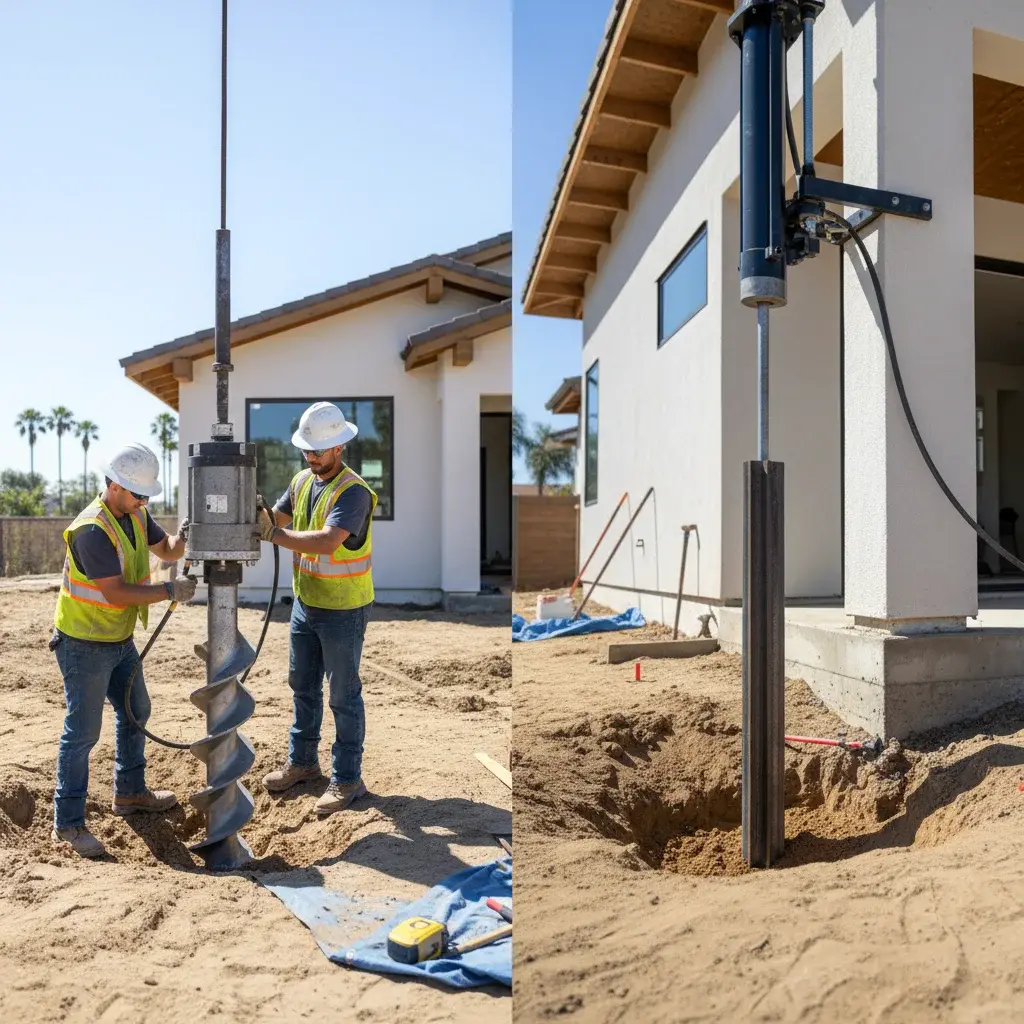
How foundation settlement gets repaired
The goal of every repair is the same: get your home’s weight onto soil that won’t move. The method depends on your foundation type and how deep stable soil sits.
Push piers
Push piers are steel tubes hydraulically driven straight down through the unstable soil until they hit firm load-bearing strata or refusal. The home’s own weight provides the resistance to push them deep. Push piers work well under heavier homes and where stable soil is reachable. Once installed, crews can lift the structure back toward level.
Helical piers
Helical piers are steel shafts with screw-like plates that get turned into the ground like a giant screw. They don’t rely on the home’s weight to install, so they suit lighter structures, additions, and porches. They’re also a good fit for some of our looser hillside soils. We compare the two in detail in helical vs push piers.
Slab jacking and foam injection
For slabs that have settled without major structural failure, crews can lift them by injecting material underneath. Mudjacking pumps a cement slurry; polyurethane foam injection uses expanding foam that’s lighter and cures fast. Both raise the slab and fill the void left by settled soil. These work best for moderate settlement, not deep structural drops.
Soil stabilization and drainage
Piers fix the symptom. If expansive clay or bad drainage caused the settlement, you also have to address the soil. That can mean regrading, adding French drains and proper downspout extensions, or chemical soil treatment. Skipping this step is how people end up repairing the same house twice.
What foundation settlement repair costs in San Diego
There’s no flat rate. Cost depends on how many piers you need, how deep stable soil is, your foundation type, and access. These ranges reflect typical San Diego projects and line up with our full foundation repair cost breakdown.
| Repair scope | Typical San Diego range |
|---|---|
| Minor crack and patch repair | $500 to $4,000 |
| Slab jacking or foam injection | $3,000 to $10,000 |
| Single section pier installation | $5,000 to $15,000 |
| Whole-home underpinning (multiple piers) | $15,000 to $40,000+ |
| Drainage correction add-on | $2,000 to $8,000 |
A few local factors push these numbers around. Deep fill soil on a hillside means longer piers and higher per-pier cost. Tight side yards and mature landscaping slow crews down and add labor. And San Diego County permits, with the engineering reports that come with structural work, get folded into the total. Anyone quoting you a firm price over the phone without seeing the house is guessing.
What to ask before you hire anyone
Settlement repair is structural, so vet the contractor like it matters. Ask whether a structural or geotechnical engineer is involved in the plan. Ask exactly what their warranty covers, whether it transfers to a new owner, and what voids it. Ask how they’ll handle the soil and drainage, not just the piers. Confirm the quote is in writing with the number of piers and depth spelled out. And verify any contractor’s license on the California Contractors State License Board site at cslb.ca.gov. These are questions for any company you call, including us.
Frequently asked questions
Is foundation settlement repair urgent?
It depends on whether the settlement is active. Stable, old settlement that stopped years ago may just need monitoring. Cracks that grow month to month, doors that get harder to close, or floors getting visibly more sloped mean it’s still moving, and waiting makes the fix bigger and more expensive.
Can I just fill the cracks myself?
Filling a crack hides the symptom without fixing the cause. If the foundation is still moving, the crack reopens or a new one appears nearby. Cosmetic sealing is fine once the structure is stabilized, but it’s not a repair on its own.
Does homeowners insurance cover settlement?
Usually not. Most policies exclude gradual settling, soil movement, and earth movement, which is what expansive clay causes. Sudden, accidental damage, like a burst pipe washing out soil, may be partly covered. Read your policy and ask your agent about your specific situation.
How long does the repair take?
A small pier job can wrap in a day or two. Whole-home underpinning with drainage work can run a week or more, plus permit and inspection time. Access and weather affect the schedule.
Will the cracks close up after piers go in?
Often they partially close during the lift, but the goal is stabilization, not erasing every crack. After the structure is stable, cosmetic crack repair and patching finish the job.
How deep do the piers go?
As deep as it takes to reach soil that can carry the load. In some San Diego neighborhoods that’s 10 to 15 feet; on deep hillside fill it can be much further. Depth is one of the biggest drivers of cost, which is why it can’t be quoted blind.
Get a straight answer on your foundation
If your floors are sloping, your cracks are growing, or a door that worked last year sticks now, get it looked at before it gets worse. We offer free inspections and upfront written quotes across San Diego County, with no pressure and no guesswork. Call us at (858) 925-5546 and we’ll tell you what’s actually going on under your house.