A sticking door can be a foundation problem in San Diego, but it isn’t always. If one door drags in winter and frees up by summer, that’s usually humidity and wood swell. If several doors on the same side of the house stick, you see diagonal cracks at the corners, and the floors feel off, the frames have moved because the foundation under them moved. San Diego’s expansive clay soil is the most common reason here.
Here’s how to tell the two apart before you spend a dollar.
Why a moving foundation makes doors and windows stick
A door is a square of wood hung inside a square frame. The frame is fixed to the wall. The wall sits on the foundation. When the foundation lifts or drops even a fraction of an inch on one side, the frame goes out of square. The door no longer fits the opening it was hung in.
You feel it in a specific order. First the door catches at one corner, usually the top. Then the latch stops lining up with the strike plate. Then the door rubs along the bottom or the side. Windows do the same thing. A double-hung that won’t slide all the way up, or a casement that won’t swing shut, is telling you the opening is no longer square.
The frame didn’t change. The opening around it did.
Humidity or foundation? Five quick checks
Before you panic, run these. They take ten minutes and they sort most cases.
Count the doors. One sticking door is probably humidity or a swollen jamb. Three or more doors sticking on the same side of the house, in the same season, is a foundation pattern.
Check the season. Sticks every winter, frees up every summer? That’s wood absorbing moisture from the air, or seasonal soil swell pushing things around and then relaxing. Sticks year-round and getting worse? That points to settlement that isn’t reversing.
Look at the corners. Walk to every door and window and look at the upper corners. A diagonal crack running down and out from a corner is structural. A clean opening with no cracking leans toward humidity.
Read the gap around the closed door. Open a sticking door and look at the gap between the door and frame all the way around. An even gap means the door swelled. A wedge-shaped gap, tight at one corner and wide at the opposite one, means the frame racked out of square. Racking is the foundation tell.
Roll a marble. Set a marble on the floor in the room with the worst door. If it rolls on its own toward one wall, the floor slopes, and the same movement bending the floor is the movement binding the door.
If the marble rolls and the corners are cracked, stop guessing and get a level survey.
What’s actually moving under San Diego homes
This is where San Diego differs from the generic advice you’ll read on national sites. Our doors stick for reasons tied to local ground.
Expansive clay soil. Large parts of the county sit on clay that swells when wet and shrinks when dry. Rancho Bernardo, Scripps Ranch, Otay Mesa, Mira Mesa, and much of East County have soils that move several inches between a wet winter and a dry summer. That cycling lifts and drops foundation edges, which racks door frames. This is the number one cause of sticking doors in the region. We cover it in depth in our guide to expansive clay soils in San Diego.
Drought-then-rain swings. A long dry stretch shrinks the clay and the house settles. Then an atmospheric river dumps water against one side of the house and that side heaves back up. Doors that were fine for years suddenly bind after a wet winter.
Slab leaks. A leaking water line under a slab keeps the soil saturated in one spot. That patch of clay swells, the slab domes, and doors near it stop closing. A sudden water bill jump plus a single cluster of sticking doors is a slab-leak signature worth ruling out.
Hillside and fill lots. Homes built on cut-and-fill pads in places like La Mesa, El Cajon, and the canyon edges of Clairemont can settle as poorly compacted fill consolidates. The downhill side drops first, and the doors on that side go first.
Poor drainage and downspouts. Water dumping next to the foundation soaks the clay right where you don’t want it. A lot of San Diego door problems trace back to a downspout that empties two feet from the wall. Often the cheapest real fix.
When sticking doors are nothing to worry about
Plenty of sticking doors are not a foundation emergency. Don’t let anyone scare you into underpinning a stable house.
A door that has stuck the same amount every winter for ten years, with no cracks and no slope, is a maintenance item. Plane the edge, adjust the hinges, seal the wood. A single interior door in a humid bathroom or laundry room is swell, not settlement. A door that started sticking right after you replaced the carpet is rubbing the new pile, not the foundation.
The honest line is this: foundation movement that has already stopped does not need repair. Many older San Diego homes settled decades ago, the cracks formed, the movement quit, and they’ve been quiet ever since. Those houses need the door adjusted, not piers.
How to prove which case you have
Two tools settle it.
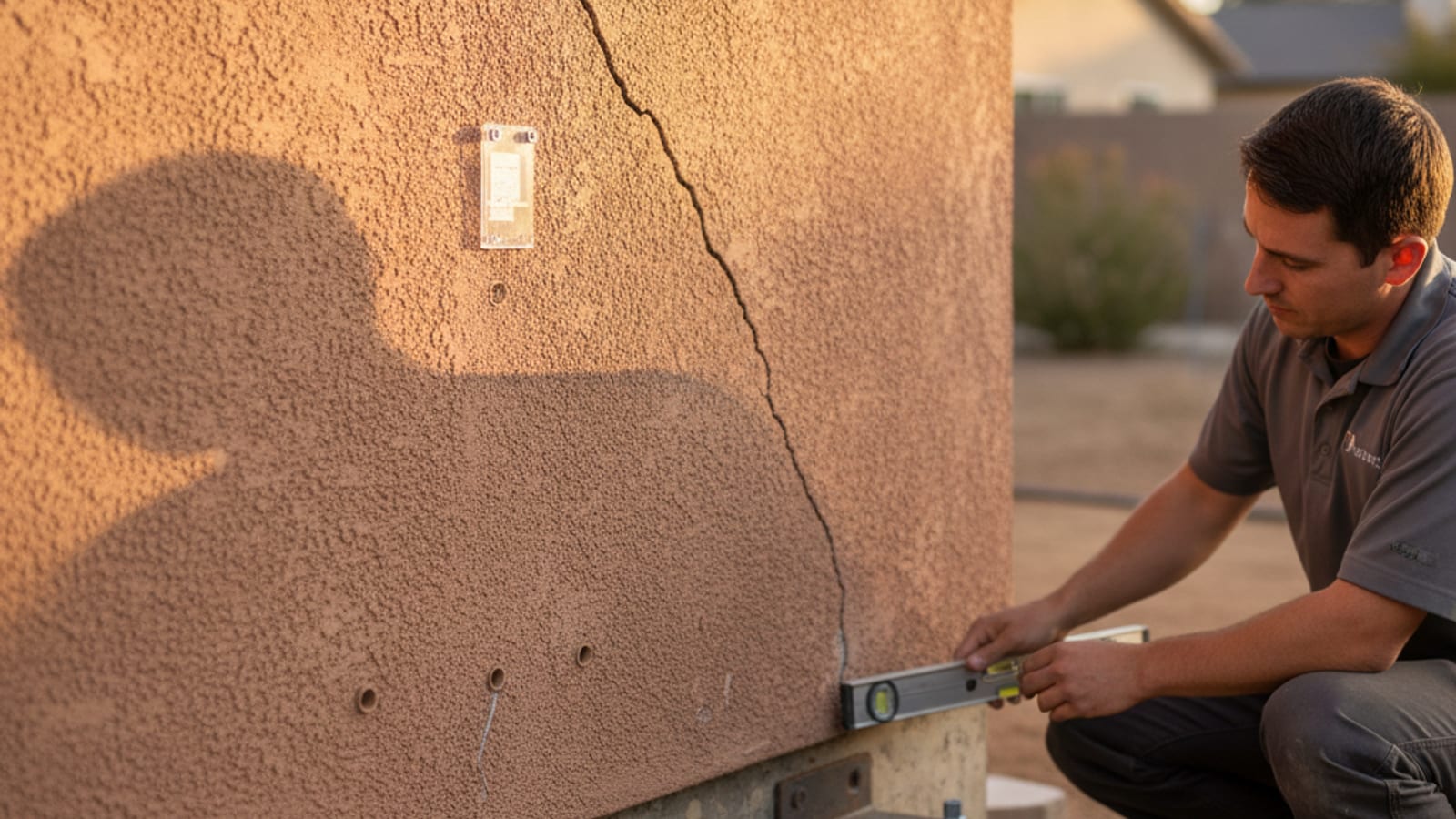
A level survey. A technician shoots elevations across your slab or floor system with a laser or Zip Level. It produces a contour of your floor in numbers. A flat reading means your sticking door is humidity or a hung-door issue. A reading that drops an inch or more across the house confirms foundation movement and shows you where.
Crack monitors. Small gauges fixed across a crack measure width to a hundredth of an inch. Read again at 60 and 90 days. Flat readings mean the movement has stopped and you can repair on your schedule, or not at all. Widening readings mean it’s active and the clock matters.
Our free inspection includes both, and you can read how a foundation inspection works before booking. We install crack monitors whether or not you hire us. See our full foundation inspection checklist for what a thorough visit should cover, and what to ask any contractor before they hand you a quote.
What it costs to fix the foundation cause
If the doors are sticking because the foundation moved, the price depends on what’s moving and how far. These are typical San Diego County ranges for the work behind the symptom, not the door itself.
| Underlying cause | Typical fix | Typical San Diego cost |
|---|---|---|
| Door racked, foundation stable | Plane, rehang, adjust hinges | $150 to $600 per door |
| Edge settlement, one side dropping | Push or helical piers | $1,500 to $3,500 per pier |
| Slab domed or dished | House leveling / slab adjustment | $5,000 to $20,000 |
| Crack letting water in | Epoxy or polyurethane injection | $500 to $1,500 per crack |
| Soil staying wet, clay swelling | Drainage correction, regrade | $2,000 to $8,000 |
| Slab leak under the floor | Leak repair, then dry-out | $1,500 to $4,500 plus plumbing |
Two notes on these numbers. Pier counts drive the cost more than anything, and clay-heavy lots in East County often need more piers than coastal lots. And drainage is the most under-quoted fix in the business. Fixing where the water goes sometimes solves the door problem for a fraction of what underpinning would cost. We break the full pricing picture down in our foundation repair cost guide for San Diego.
Questions to ask before you sign anything
Foundation work is one of the few home repairs you can’t easily undo, so the contractor matters as much as the method. Reasonable things to ask:
- Will you give me a level survey in writing, not just a verbal opinion?
- Are you proposing piers because the survey shows active movement, or because it’s the bigger ticket?
- Have you ruled out a slab leak and drainage before recommending underpinning?
- What does your workmanship warranty actually cover, and is it transferable if I sell?
- Will you pull the required city permit for this work?
Get the answers in writing. A good contractor welcomes the questions.
FAQ
Do sticking doors always mean foundation problems? No. Most single sticking doors are humidity, swollen wood, or a hinge that needs adjusting. Foundation trouble shows up as a pattern: several doors on one side, plus corner cracks and sloping floors. The pattern is the signal, not any one door.
My doors stick every winter and free up in summer. Is that bad? That seasonal swing usually means wood swell or expansive clay cycling under the house. The cycling itself can fatigue a foundation over years, so it’s worth a free inspection to confirm whether the movement is reversing fully or leaving you a little worse each year.
Can I just plane the door to make it close? You can, and for a stable house that’s the right call. But if the foundation is still moving, you’ll be planing again next year, and you’ll have shaved a door that won’t fit once the frame is corrected. Confirm the foundation is stable before you take a planer to it.
How fast do I need to act? If the doors stick the same amount year after year with no new cracks, you have time. If they’re getting visibly worse season over season, or new diagonal cracks are opening, get a level survey soon. Active movement only gets more expensive to fix.
Could it be a slab leak instead? Yes, especially if the sticking is clustered in one area and your water bill jumped. A slab leak saturates the clay in one spot and domes the slab. It’s worth ruling out before any structural work, since fixing the leak may be the whole fix.
The straight answer
Walk the house. Count the sticking doors, check the corners for cracks, roll a marble. One door and no cracks, it’s almost certainly humidity, so adjust it and move on. Several doors, corner cracks, and a sloping floor, the foundation moved and you want a level survey before anyone sells you piers.
We do that survey free across San Diego County, and we’ll tell you honestly if the answer is “do nothing for now.” Call Base Pro San Diego at (858) 925-5546 to set up a free inspection.