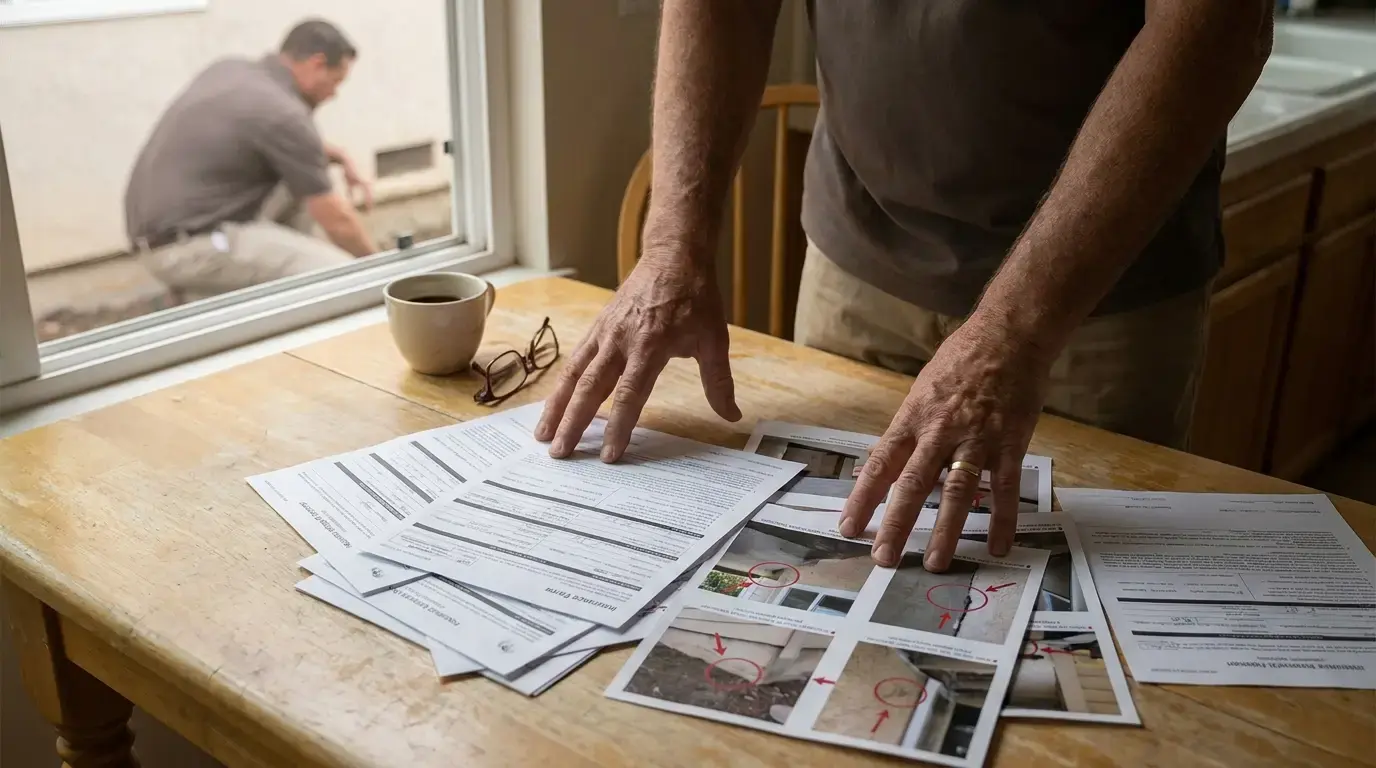
Usually no. Most foundation repair is not covered by a standard homeowners policy. But there are real exceptions, and knowing them before you file a claim can save you thousands of dollars.
The short version: if something sudden and accidental caused your foundation damage, coverage is possible. If the cause is soil movement, settling, drainage problems, or years of gradual wear, your policy almost certainly excludes it. Here’s what that means for San Diego homeowners specifically.
The general rule
Standard homeowners insurance covers your home against sudden, accidental perils: fire, windstorm, a tree falling through the roof. Foundation repair gets covered under that same logic only when the foundation damage resulted directly from a covered event.
The most common example is a burst pipe. If a plumbing line inside your slab fails suddenly and the resulting water pressure or erosion causes foundation movement, your carrier may cover the water damage and some structural repair. Whether the actual foundation work is covered depends on your specific policy language and how the adjuster interprets cause and effect.
That’s the narrow window where coverage exists. Outside it, the exclusions dominate.
What your policy almost certainly excludes
Most standard policies use almost identical exclusion language. These are the ones that catch San Diego homeowners off guard:
Earth movement. Settling, shifting, expansion, or contraction of soil is excluded in nearly every standard policy. San Diego’s clay-heavy soils and variable moisture levels make this the most common denial reason here. When the ground moves, your foundation moves with it, and that’s on you.
Flooding and surface water. If water entered from outside, even during a heavy rain event, that’s a flood exclusion. Flood damage requires a separate NFIP or private flood policy entirely.
Gradual water damage. A slow leak under your slab over months or years is not sudden. Most policies exclude damage that built up over time, even if you didn’t know it was happening.
Poor construction, design defects, or inadequate maintenance. If the original builder used substandard materials or improper grading, that’s outside covered territory.
Normal wear and deterioration. Concrete ages. Settlement happens. These are considered normal and excluded.
Coverage depends entirely on your individual policy. Read your declarations page and the exclusions section carefully, and call your agent if anything is unclear.
Covered vs. not covered: a quick reference
| Cause of foundation damage | Typically covered? |
|---|---|
| Burst pipe causes slab movement | Often yes (varies by policy) |
| Gradual slab leak over months | Unlikely |
| Soil settlement or shrinkage | No |
| Expansive clay soil movement | No |
| Earthquake damage | No (separate CEA policy needed) |
| Tree root intrusion over time | No |
| Sudden storm causing structural collapse | Possibly |
| Flood or surface water intrusion | No (requires separate flood policy) |
| Construction or design defect | No |
The slab-leak nuance in California
This is where things get genuinely complicated, and it’s worth understanding if you have a slab leak causing foundation damage.
In California, insurers have faced significant litigation over slab leaks. The general pattern: your carrier may cover the cost to access and repair the leaking pipe, and may cover resulting water damage to flooring or drywall. Whether they’ll pay for any foundation movement caused by that leak is a separate question, and the answer varies by carrier and policy.
Some California policies have riders or endorsements that extend limited coverage to resulting foundation damage from a sudden pipe failure. Others explicitly carve it out. You won’t know until you read the policy language or get an adjuster on-site.
If you have a confirmed slab leak, document everything before any repair work starts. Photos, video, moisture readings, the plumber’s written diagnosis. That documentation becomes your claim file.
Earthquake coverage is separate
San Diego does have seismic activity, and earthquake damage is not covered by any standard homeowners policy. If you want protection for quake-related foundation damage, you need a California Earthquake Authority (CEA) policy or a private earthquake endorsement. CEA policies have their own deductibles, typically 10 to 25 percent of the dwelling coverage limit, which means earthquake foundation work still often comes out of pocket in a significant way. Still, if you’re in a higher-risk area or your home sits on softer soils, that coverage is worth pricing out.
How to read a claim denial
If your carrier denies your foundation claim, the denial letter will cite a specific exclusion from your policy. Read it carefully. Common denial language includes:
- “Earth movement” or “soil subsidence”
- “Gradual or continuous water damage”
- “Wear, tear, deterioration, or latent defect”
- “Settling, shrinking, bulging, or expansion”
Once you know the cited exclusion, you can assess whether to accept it, request reinspection, or escalate. California’s Department of Insurance has a formal complaint process if you believe a denial was improper.
A public adjuster or a property insurance attorney can review a denial for you, often on contingency. That’s worth exploring if the repair cost is significant and the denial feels wrong.
How to document and file a foundation claim
If you believe your damage may be covered, don’t guess. Move methodically.
Step one: stop further damage. Carriers can deny claims if you allowed damage to worsen after discovery. If there’s an active leak, get it stopped.
Step two: document before anything is touched. Photograph every crack, every affected area, every inch of moisture intrusion. Video walkthroughs work well. Date everything.
Step three: get a professional inspection. A written foundation inspection report from a qualified contractor establishes causation. This is the document your adjuster will rely on. Make sure it clearly states what caused the damage and when the damage likely began.
Step four: call your carrier and open a claim. Don’t wait. Most policies have time limits on claim reporting after discovery of damage.
Step five: be present for the adjuster visit. Walk them through the damage yourself. Have your contractor’s report ready. Ask the adjuster to explain their findings in writing.
A professional foundation repair contractor who has worked with insurance claims before can help you document the damage in terms adjusters understand.
When the claim is denied: you still have to fix it
This is the hard truth most homeowners avoid facing. A claim denial doesn’t make the foundation damage go away. Left alone, foundation problems get more expensive over time, not less. Cracks grow. Moisture finds new paths. And when you go to sell, the inspection report will surface everything anyway, which affects your negotiating position and your sale price. We’ve written about that in detail in how foundation repair affects home value.
The good news is that foundation crack repair and slab repair are often more affordable than people expect, especially when caught before structural movement becomes severe. And financing options exist for homeowners who need them. See our guide on foundation repair financing in San Diego for a realistic breakdown.
For a full picture of what repair typically costs locally, our 2026 San Diego foundation repair cost guide covers current pricing across the most common repair types.
What to do next
Start with a professional inspection. Whether you’re preparing a claim, responding to a denial, or just trying to understand what you’re dealing with, a written assessment gives you something concrete to work with.
Base Pro San Diego provides free foundation inspections throughout San Diego County. We can help you document the damage, explain what we’re seeing in plain terms, and give you a clear picture of your repair options. If you’re working through a potential insurance claim, we’ll make sure our report covers the details your carrier will need.
Call us at (858) 925-5546. We’re local, we’re straightforward, and we’ll give you honest information from the first conversation.
This post is general information only and is not legal or insurance advice. Coverage depends on your individual policy. Always review your policy documents and speak with your insurance agent or carrier directly.