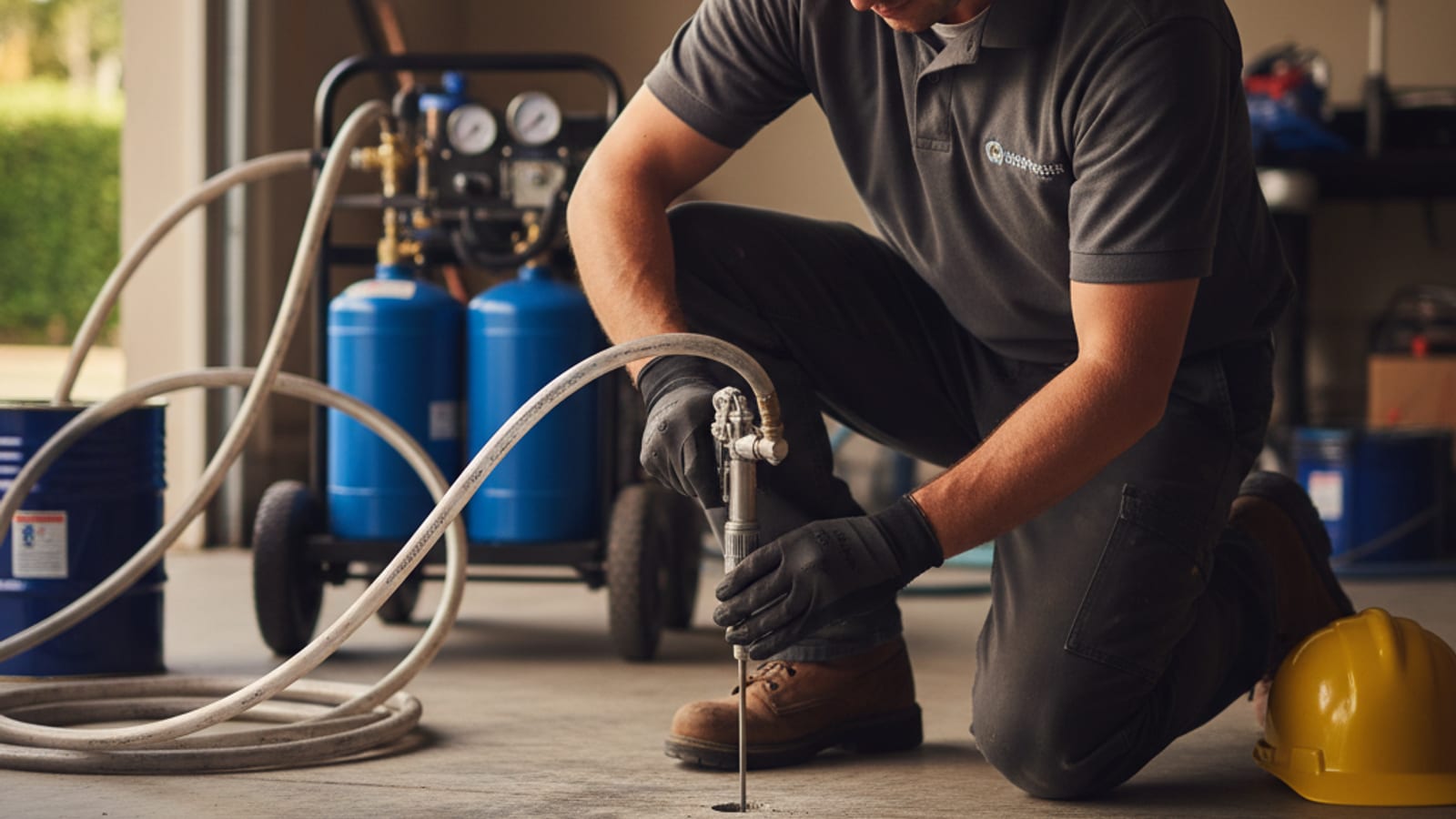
Soil stabilization in San Diego means changing the soil under your house so it stops moving your foundation. Most of the time that’s expansive clay, which swells when wet and shrinks when dry. Stabilization treats the soil itself with injected polyurethane, grout, or chemical binders. It’s different from piers, which bypass bad soil and reach stable ground below. Knowing which one your home needs saves you real money.
Here’s how it works in our county, what it costs, and how to tell if it’s the right fix.
What soil stabilization actually does
Most foundation repair fixes the structure. Soil stabilization fixes the ground. The goal is to stop the soil from shrinking and swelling, or to fill voids so the soil can’t shift under load.
In San Diego, the problem soil is almost always expansive clay. We wrote the full breakdown in our expansive clay soils post, but the short version is this. Clay particles absorb water and grow up to 30% in volume, then shrink back when they dry out. Your foundation rides that cycle every season. Stabilization breaks the cycle.
There are a few real methods, and they solve different problems.
The main methods used in San Diego County
Polyurethane foam injection. Drill small ports through the slab, inject expanding polymer foam, and the foam fills voids and lifts settled concrete back to level. Fast, low-mess, cures in minutes. Good for slab settlement over loose or washed-out soil. Less effective on deep clay heave.
Compaction grouting. Pump a stiff grout under pressure to compact loose soil and fill voids. Used where fill was poorly compacted during grading, common on older hillside tracts from the 1970s and 80s in East County and North County inland.
Chemical soil stabilization. Inject lime or ionic compounds that change the clay’s chemistry so it stops absorbing water. This is the one built specifically for expansive clay. It reduces the swell potential rather than just filling space.
Moisture control as stabilization. Sometimes the cheapest fix isn’t injection at all. Steady soil moisture keeps clay from cycling. Root barriers, proper drainage, and managed irrigation can stabilize mild clay movement for a fraction of the cost. We cover the drainage side in our foundation drainage guide.
Soil stabilization cost in San Diego
Pricing depends on the method, the access, and how much soil needs treatment. These are real ranges for our county.
| Method | Typical cost | Best for |
|---|---|---|
| Polyurethane foam injection | $5 to $25 per square foot | Slab settlement, voids under concrete |
| Compaction grouting | $1,500 to $6,000 per area | Loose or poorly compacted fill |
| Chemical clay stabilization | $4,000 to $12,000 | Active expansive clay movement |
| Drainage and moisture control | $2,000 to $9,000 | Mild seasonal clay cycling |
A small slab lift might run a few hundred dollars. A full clay treatment under a settling addition can reach five figures. The honest answer is the same one we give on every job: it depends on what’s actually wrong, and you shouldn’t trust a number until someone has looked at the soil.
Stabilization vs. piers: which does your home need?
This is the question that matters most, because picking wrong wastes thousands.
Soil stabilization treats the soil so it stops moving. Piers ignore the soil and transfer the house weight down to stable ground or bedrock. We break the pier types down in our helical vs. push piers post.
Use this as a rough guide:
- Slab settlement over voids or loose fill? Stabilization, usually foam injection, is often enough.
- Mild seasonal clay cycling with minor cracks? Drainage and moisture control first.
- Active heave or settlement that keeps coming back? Chemical stabilization, sometimes paired with drainage.
- Major settlement on a two-story or deep-fill hillside lot? Piers, not soil treatment. The soil is too unstable to fix.
Plenty of San Diego jobs use both. Stabilize the soil to stop new movement, then pier the parts of the structure that already dropped. A good plan matches the fix to the cause.
Where this comes up most in our county
San Diego’s soil isn’t uniform, and stabilization needs follow the geology.
- East County valleys (El Cajon, Santee, Lakeside, Alpine) sit on expansive clay and old graded fill. Compaction grouting and clay treatment are common here.
- North County inland (San Marcos, Escondido, Vista, Fallbrook, Ramona) has the heaviest clay in the county. Chemical stabilization and drainage do the most work.
- Hillside tracts cut in the 1970s and 80s often have poorly compacted fill that settles for decades. Grouting fills the voids.
- Coastal and sandy lots (beach areas, decomposed granite foothills) rarely need clay stabilization. Their issues are usually drainage or slab leaks instead.
Seismic risk matters too. Loose, unstable soil amplifies shaking, so stabilizing fill before a quake is worth thinking about on at-risk hillside lots.
What to ask before you sign anything
Soil stabilization gets oversold. Some contractors push injection on every job because it’s fast and profitable. Protect yourself with a few questions.
- Was the soil actually tested or assessed, or is this a guess?
- Why this method instead of piers, drainage, or moisture control?
- What’s the warranty, and what voids it? Ask the contractor to put it in writing.
- Does the plan address the cause (water, fill, clay) or just the symptom?
A contractor who answers with specifics about your soil is doing it right. One who says “we always inject” is selling a product, not solving your problem. If a job is large or structural, ask whether a soils report or a structural engineer’s stamp is warranted before work starts.
Frequently asked questions
Is soil stabilization permanent? No method is truly permanent, but chemical clay treatment and proper compaction grouting can last decades. Drainage-based control needs upkeep. Ask any contractor exactly what their warranty covers and for how long.
How do I know if I have expansive clay? Seasonal cracks that open in summer and close in winter are a strong sign. So are doors that stick only part of the year. A soils assessment confirms it. Our soil stabilization service page explains what we look for.
Is stabilization cheaper than piers? Often, yes, for slab settlement and mild clay movement. But for major structural settlement, piers are the correct fix, and stabilization alone won’t hold. Cheaper isn’t better if it doesn’t solve the actual problem.
Can I just fix the drainage instead? Sometimes. For mild clay cycling, controlling water around the house can be enough. We always check drainage first because it’s the lowest-cost option that actually works.
Does soil stabilization fix existing cracks? It stops the movement causing them, but it doesn’t repair the cracks themselves. Crack repair is a separate step, often done in the same visit.
Do I need a permit for soil stabilization? Minor injection usually doesn’t. Larger structural work may. Your contractor should know the local requirements and pull permits when needed. Ask before work begins.
When to call us
If your floors are uneven, your cracks open and close with the seasons, or your slab has dropped, the soil under your home is likely the cause. We offer a free inspection and an upfront quote, with no pressure to buy something you don’t need. We serve all of San Diego County and we know its clay. Call us at (858) 925-5546 for a free estimate.