Discovering your San Diego home has unlevel floors or a shifting foundation is concerning, and naturally, your first question might be about the repair cost. House leveling is a significant investment in your property’s stability and value. However, providing an exact price without a professional assessment is impossible, as many factors influence the final cost.
This guide will break down the variables that impact house leveling expenses in San Diego, provide realistic cost ranges for different methods, and help you understand when it’s time to call in the experts at Base Pro San Diego.
What factors determine the cost of leveling a house?
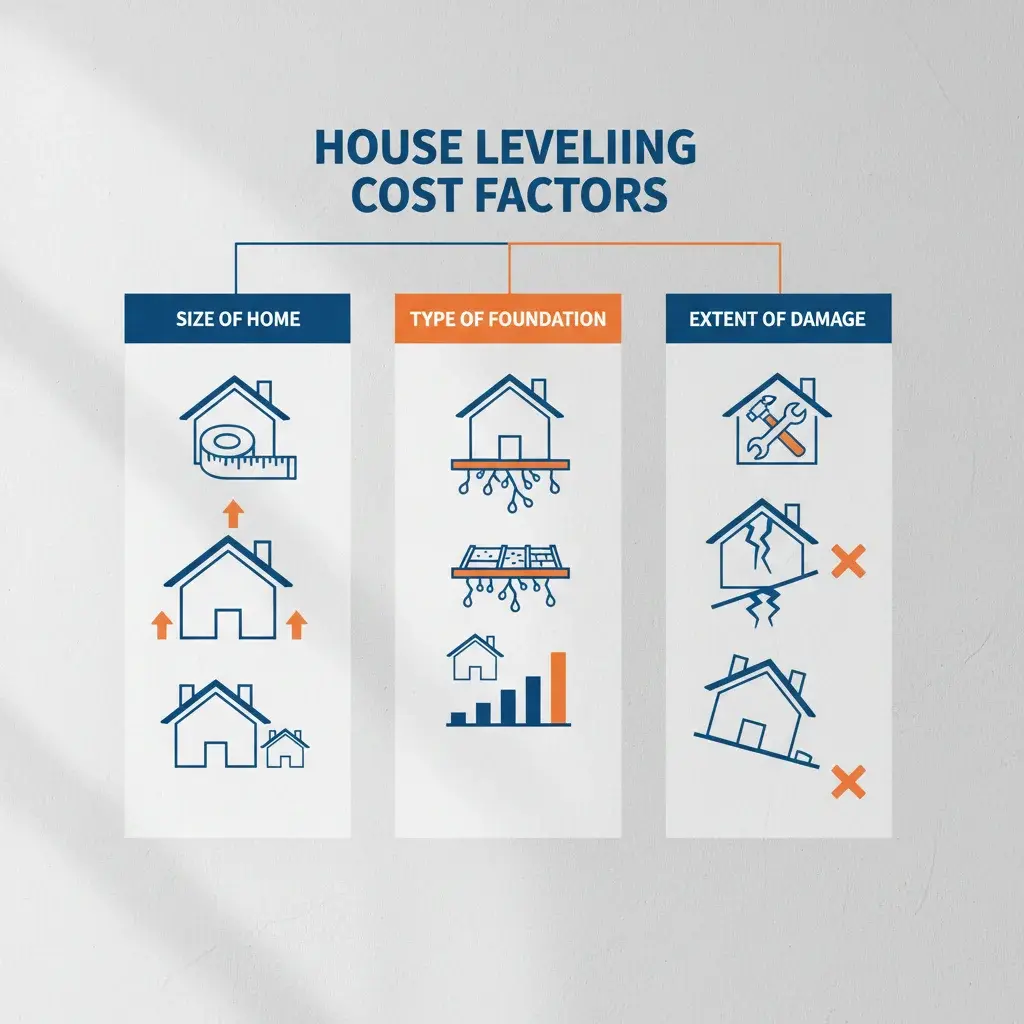
The cost to level a house in San Diego isn’t a one-size-fits-all number. Every home and every foundation issue is unique, leading to a wide range of potential expenses. Understanding these factors will help you see why an on-site inspection is so critical for an accurate quote.
Type of foundation
San Diego homes often have slab foundations, pier and beam foundations, or foundations over crawl spaces. Each type requires different leveling approaches and costs. Slab foundations, where the house sits directly on a concrete slab, often need specialized techniques like mudjacking, polyjacking, or pier installation. Pier and beam foundations, common in older homes, typically involve adjusting or replacing piers, shims, or support beams in the crawl space. Generally, pier and beam adjustments can be less invasive than slab repairs, potentially leading to lower costs for similar degrees of leveling.
Extent of damage
Is it minor settling in one corner or widespread structural issues affecting the entire perimeter? Small, isolated areas needing a slight lift will naturally cost less than major structural damage requiring extensive work. The severity of cracks, the degree of floor slope, and the overall instability of the structure all play a major role in the scope and price of the repair.
Size of the house
A larger home means more foundation area to inspect, stabilize, and potentially lift. This translates to more materials, more labor hours, and a higher overall cost. Similarly, multi-story homes can present additional complexities due to increased weight and load distribution.
Accessibility
Can workers easily access the foundation? Tight crawl spaces, dense landscaping, decks, or concrete patios can hinder access, requiring more time, effort, and sometimes even demolition to reach the affected areas. Difficult access adds to labor costs and overall project duration.
Soil conditions
San Diego is known for its expansive clay soils, which can swell and shrink significantly with moisture changes. These dynamic soil conditions are a primary culprit behind foundation problems. If the soil needs stabilization or if drainage issues contributed to the problem, these additional services will factor into the total cost. Addressing the underlying soil problems is crucial for long-term stability and preventing future issues.
Required permits
Any significant foundation repair in San Diego County typically requires permits from local building departments. These permits ensure the work meets safety and structural codes. The cost of permits and engineering reports will be included in your project total.
All these elements combine to create a highly individualized repair plan and cost estimate for your home.
Average cost ranges for different leveling methods
Given the many variables, it’s challenging to give exact figures for house leveling, but we can provide realistic ranges based on common scenarios in San Diego. Remember, these are broad estimates, and a professional foundation inspection is the only way to get a firm quote.
Slab foundation leveling
For homes with slab foundations, common methods include:
- Slab jacking (mudjacking or polyjacking): This involves injecting a grout (mudjacking) or polyurethane foam (polyjacking) beneath the slab to lift it. For minor to moderate lifts in isolated areas, costs can range from $3,000 to $10,000. Polyjacking is often more expensive than mudjacking due to material costs, but it’s lighter and sets faster.
- Pier installation (helical or push piers): For more significant or widespread slab settlement, installing steel piers (helical or push piers) deep into stable soil layers is necessary. This is a more permanent and durable solution. The cost per pier can vary significantly, and a typical project might involve multiple piers. Total costs for pier installation can range from $15,000 to $40,000+, depending on the number of piers, depth required, and other site-specific factors.
Pier and beam / crawl space leveling
Homes with pier and beam foundations or those built over crawl spaces typically require a different approach:
- Shimming and pier adjustments: For minor settling, workers might adjust existing shims, replace rotten wood, or add new supports. These repairs can range from $5,000 to $15,000.
- New pier installation or beam replacement: If existing piers are failing, or beams are severely damaged, new concrete or adjustable steel piers might be installed, or sections of beams replaced. More extensive repairs can range from $10,000 to $25,000+, especially if there’s significant structural deterioration or if extensive jacking and leveling are required across a large area.
These ranges reflect the complexity and material costs involved. Keep in mind that unforeseen issues discovered during the repair process can sometimes slightly adjust the final cost. That’s why working with a transparent contractor like Base Pro San Diego is essential.
Are there signs my house needs leveling?
Spotting the early signs of foundation problems can save you significant money and stress in the long run. Many homeowners don’t realize their house needs leveling until issues become very noticeable. Here are common indicators to look for in your San Diego home:
Uneven or sloped floors
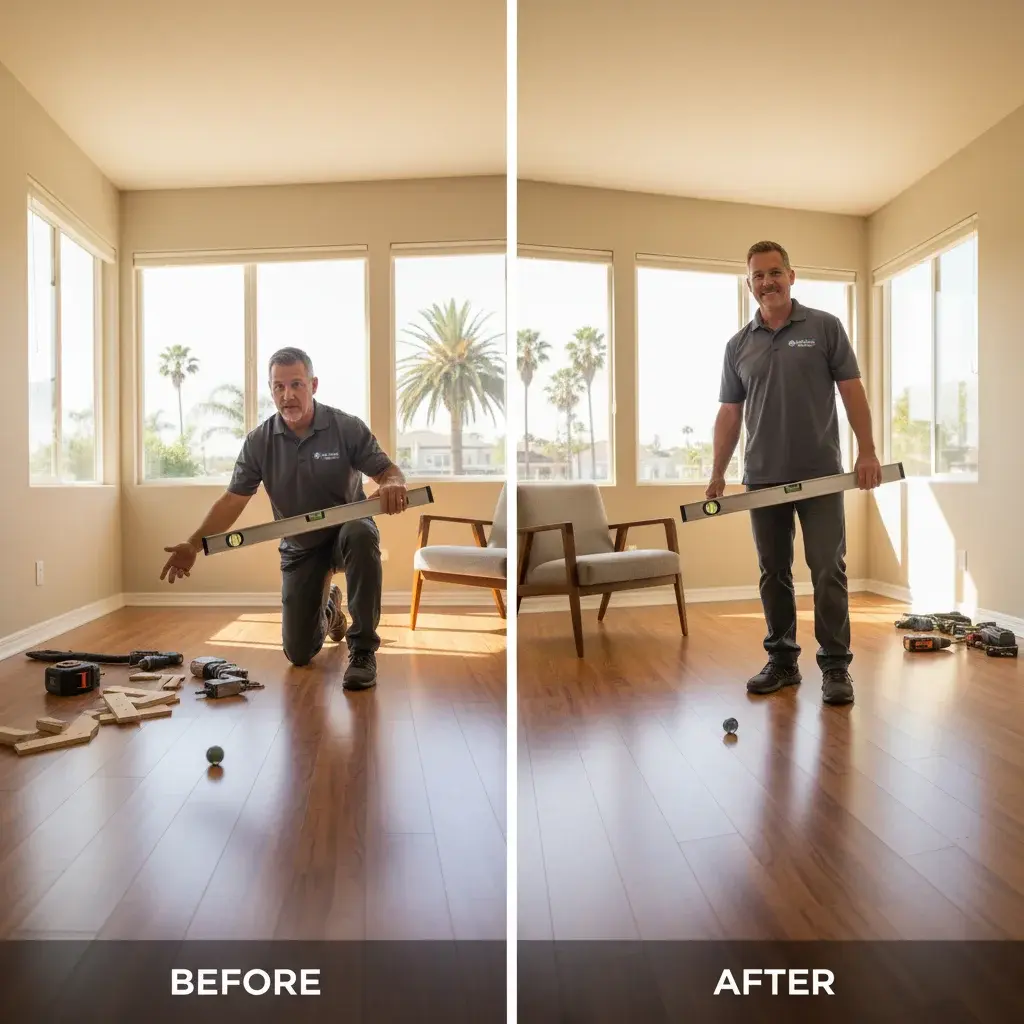
This is one of the most direct signs. If you notice a pronounced slope when walking across a room, or if a marble or ball rolls consistently to one side, your floors are likely uneven. This often points to differential settlement of the foundation.
Cracks in walls, ceilings, or the foundation
Pay attention to cracks in your interior drywall, especially around door frames and windows. Diagonal cracks are often indicative of structural stress. Exterior brickwork or stucco might also show stair-step cracks. Critically, inspect the foundation itself for cracks, especially if they are wider than a quarter-inch, or if you can see through them. Minor hairline cracks are often normal, but larger, continuous cracks warrant concern.
Sticking doors and windows
If doors suddenly stick or won’t latch properly, or if windows become difficult to open or close, it could be due to the house settling and warping the frames. This is a common symptom of an unlevel foundation.
Gaps between walls, ceilings, and floors
Look for noticeable gaps where walls meet the ceiling or the floor. As a house settles unevenly, these connections can pull apart, creating visible spaces.
Visible sinking or settling
Outside your home, check if one side of the house appears lower than the rest. You might also notice gaps between the foundation and the soil, or a general sense that the house is “sinking” into the ground.
Water pooling around the foundation
Poor drainage can lead to soil erosion and foundation damage. If you consistently see water pooling near your foundation after rain, it’s a red flag that could exacerbate or cause leveling issues. Implementing a proper foundation drainage system might be necessary.
If you observe any of these signs, it’s crucial not to delay. Early intervention can prevent minor issues from becoming major, costly structural repairs. Contact Base Pro San Diego for a thorough foundation inspection to accurately diagnose the problem.
Does homeowners insurance cover house leveling?
Many San Diego homeowners hope their insurance policy will cover the substantial cost of house leveling. Unfortunately, in most cases, homeowners insurance typically does not cover damage caused by gradual settlement, shifting, or deterioration of the foundation.
Homeowners insurance policies are generally designed to cover sudden and accidental events, such as:
- Burst pipes or plumbing leaks: If a sudden, accidental pipe burst causes significant soil washout leading to foundation damage, the initial damage from the pipe might be covered, and by extension, the foundation repair needed as a direct result.
- Fire or vandalism: While less common for foundation-specific damage, if these perils directly impact the foundation’s integrity, they might be covered.
- Other named perils: Certain policies might cover damage from specific events like explosions, falling objects, or impact from vehicles.
What’s usually not covered includes:
- Earth movement: Most policies exclude damage from earthquakes, landslides, or mudslides unless you have specific, separate coverage (like earthquake insurance).
- Settling, shifting, shrinking, or expansion of the foundation: This is considered a maintenance issue or an act of nature over time, not a sudden event.
- Poor construction or faulty repairs: If the foundation issue stems from original construction defects or previous substandard repairs, it’s typically not covered.
- Flooding: While a burst pipe might be covered, general flooding (e.g., from heavy rain entering your home) is often excluded unless you have separate flood insurance.
It’s always best to review your specific homeowners insurance policy documents carefully and speak directly with your insurance agent. They can clarify what is and isn’t covered under your current plan. Even if direct leveling isn’t covered, sometimes the underlying cause (like a sudden plumbing issue) might be.
Getting an accurate quote for your San Diego home
The notes have stressed this, and I will too: you can’t get an accurate price for house leveling without an on-site evaluation. Online estimates or ballpark figures are merely guesses. Your San Diego home is unique, and its foundation issues require a tailored solution.
Here’s why an inspection from Base Pro San Diego is essential:
- Precise diagnosis: Our experts will conduct a thorough foundation inspection. This involves examining the interior and exterior of your home, measuring floor levels, assessing cracks, identifying the type of foundation, and evaluating soil and drainage conditions. We’ll pinpoint the exact cause and extent of your foundation problems.
- Customized repair plan: Based on the diagnosis, we’ll design a specific repair strategy for your home. This might involve slab jacking, pier installation, crawl space adjustments, or a combination of methods. We’ll explain why each step is necessary.
- Detailed, transparent proposal: You’ll receive a clear, written estimate outlining the proposed work, materials, timeline, and total cost. We believe in complete transparency, so you’ll understand exactly what you’re paying for.
When selecting a contractor for house leveling in San Diego, always prioritize experience, licensing, and reputation. Verify their license with the California Contractors State License Board (CSLB) at cslb.ca.gov. This ensures they meet professional standards and are qualified to perform the work.
At Base Pro San Diego, we provide comprehensive, honest assessments and durable foundation repair solutions. We aim to restore your home’s stability and your peace of mind.
When to call us
If you’ve noticed any signs of uneven floors, cracking walls, or sticky doors and windows, it’s time to have a professional evaluate your foundation. Early intervention can prevent minor issues from escalating into major structural damage, saving you significant costs in the long run. Don’t wait for the problem to worsen. Call us at (858) 925-5546 for a same-day estimate.