Last updated: April 23, 2026
Helical Piers in Casa de Oro, CA.
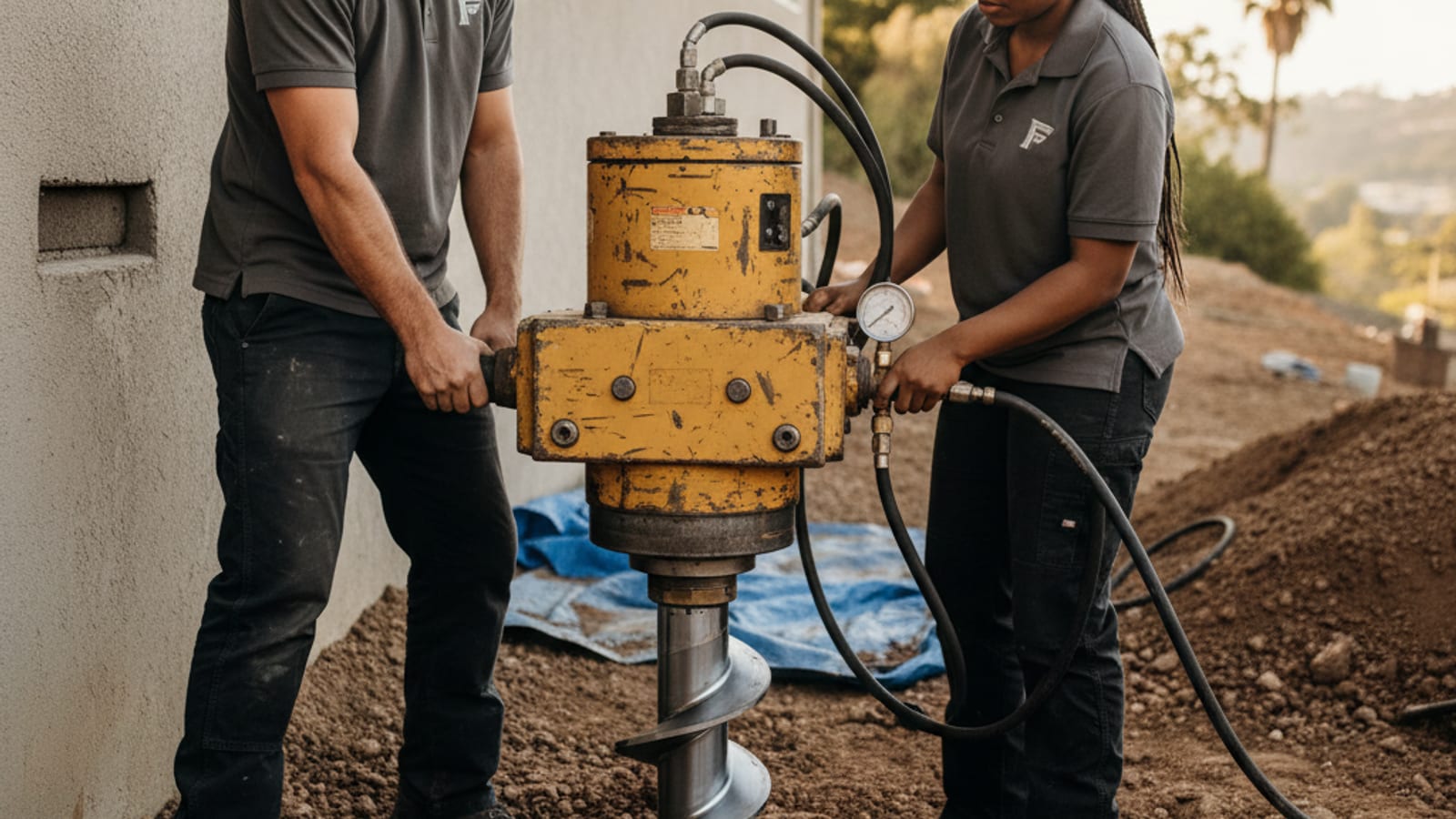
Helical Piers for Casa de Oro homes, done by an experienced San Diego County foundation crew. Helical piers are the right answer when soil at the surface cannot support the load and competent strata is 8 to 30 feet down. We rotate steel shafts with welded helical plates into the ground until the torque reading on the drive head matches the engineered design load.
Why is helical piers different in East County San Diego?
East County helical work usually terminates in decomposed granite or weathered bedrock at 10 to 25 feet. Hard drilling, but predictable refusal, and very long-lived installation once seated.
What's included in helical piers in Casa de Oro?
- Engineered pier layout with spacing per stamped plan (typical 5 to 8 ft on center)
- ICC-ES rated helical pier shaft and plate selection sized to the soil
- Hydraulic torque-monitoring during install to verify capacity
- Foundation bracket installation with anchor bolts cast into the footing
- Load transfer with hydraulic jacks and locking nuts
- Recovery lift where the structure can safely be brought back to level
- Engineer field observation and stamped pier log
- Permit, inspection, and final sign-off
When does a Casa de Oro home need helical piers?
- Active settlement on a hillside lot or canyon edge
- New ADU or addition load that exceeds existing footing capacity
- Slab that has dropped at one corner more than 1.5 inches
- Foundation bearing on uncompacted fill or expansive clay
- Light pole, retaining wall, or deck footing that needs stable support
- Replacement of a failed driven concrete pier from a prior repair
What do Casa de Oro homeowners ask about helical piers?
How fast can you inspect a foundation in Casa de Oro?
Most Casa de Oro inspections book within 3 to 5 business days. Active settlement, post-storm damage, or a pre-listing deadline can usually be slotted sooner. The free onsite inspection runs 60 to 90 minutes.
What does helical piers cost in Casa de Oro?
Installed pier $1,800 to $3,500 each · most jobs use 4 to 12 piers. Pricing is the same across San Diego County, with no mileage upcharge for Casa de Oro. We give a flat-rate written quote after the free onsite inspection.
How does Casa de Oro's climate affect this service?
Casa de Oro is unincorporated East County with mid-century ranch and newer custom stock. Original post-and-pier raised foundations need cripple wall and seismic retrofit work; the older custom builds see hillside perimeter settlement on the steeper lots.. East County helical work usually terminates in decomposed granite or weathered bedrock at 10 to 25 feet.
How deep do helical piers go?
As deep as needed to hit competent soil. In San Diego County we see piers terminate anywhere from 8 feet (decomposed granite over bedrock in inland canyon lots) to 35 feet (deep clay or alluvial fill near coastal valleys and old creek beds). The torque reading on the drive head, not the depth, tells us when we have hit the right strata.
Helical piers vs push piers, which is better?
Helical piers carry their load on the helical plates and are torque-verified during install, so capacity is known before the bracket goes on. Push piers carry load by friction along the shaft and need the weight of the structure to advance, so they verify capacity through reaction load. Helical wins for light structures, ADUs, and decks. Push piers win for heavy two-story homes where the dead load is high enough to drive the shaft to refusal.
Need helical piers in Casa de Oro?
Call for a free onsite inspection and a flat-rate, engineer-stamped repair plan.